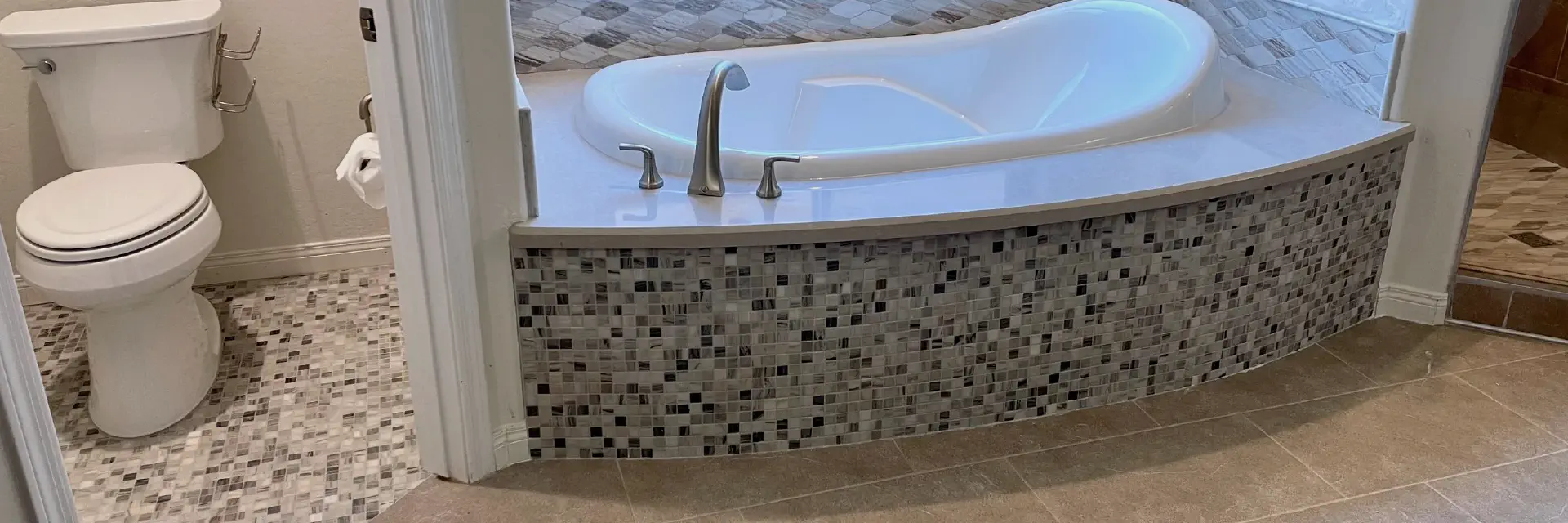
Kitchen & Bathroom Remodeling in the East Valley
Most East Valley homeowners hiring for a kitchen or bathroom remodel end up managing two separate relationships: a plumber for the rough-in and a separate contractor for everything else. Coordinating schedules, reconciling competing installation sequences, and figuring out who is responsible when something doesn’t line up. That coordination burden lands on you.
Diagnostic Plumbing is triple-licensed to handle the full scope ourselves. Plumbing rough-in, slab work, carpentry, drywall, fixtures, and finishes: one company, one contract, one point of contact.
One Company, One Point of Contact
The “hire a plumber, then hire a finisher” approach is common in the East Valley. It works, but it creates a coordination problem. Who cuts the opening for the new shower valve? Who patches the drywall after the drain re-route? Who is responsible when the tile guy shows up before the rough-in inspection is done?
When one company holds the GC license and the trade licenses, that problem disappears. We plan the sequence, we pull the permits, we schedule the inspections, and we own the result. You make decisions about materials and finishes; we handle everything else.
Triple Licensed: B-3 General + CR-37 Plumbing + CR-61 Carpentry
Arizona requires contractors to hold the appropriate license for each type of work they perform. We hold three:
- ROC #332463 — B-3 General Remodeling. This is Arizona’s general contractor license for remodeling projects. It authorizes us to act as the GC on full remodels: manage scope, pull permits, coordinate inspections, and contract for the full project.
- ROC #327364 — CR-37 Plumbing. The trade license for all plumbing work — rough-in, drain re-routes, fixture installation, gas lines, and pressure testing.
- ROC #327365 — CR-61 Carpentry, Remodeling & Repairs. Covers carpentry, drywall, framing, texture, and finish work on both residential and commercial projects.
You can verify all three at the Arizona ROC license lookup.
What We Remodel
Bathroom remodels — from a vanity-and-fixture refresh to a full tear-out with new tile, shower conversion, and relocated plumbing. Partial remodels (new toilet, vanity, flooring) and full gut-and-rebuild, depending on what the space calls for.
Tub-to-walk-in shower conversions — one of the most-requested projects in the East Valley, and a practical aging-in-place upgrade. We remove the tub and surround, reframe the opening, rough in the new drain and valve, and finish with a tiled shower, fixtures, and glass.
Kitchen remodels — sink relocations, island plumbing, dishwasher add-ons, garbage disposals, and gas-line work for range installations. A kitchen remodel is also a natural time to add under-sink reverse osmosis while the cabinet is open and the plumber is already on-site.
Laundry rooms — rough-in for a utility sink, water shutoff upgrades, drain pan installation, and connection for new appliances.
Wet bars — supply lines, drain rough-in, and finish plumbing for bar sinks and beverage centers.
Outdoor kitchens — gas line runs, hose bib placement, and drain considerations on slab properties where a French drain or dry well may be needed.
Bathroom additions — adding a bath to a slab home means breaking and re-routing drain lines. See the slab section below for how we handle that scope.
For smaller scope work that doesn’t rise to a full remodel, see Plumbing Repairs.
Our Process
This is the sequence we follow on every remodel, from the first phone call to the final walkthrough. Each phase has a defined deliverable, so you always know where the project stands.
1. Discovery — Site Visit and Scope Assessment
We start with a site visit, not a phone estimate. A remodel involves physical constraints that matter: the age and material of existing plumbing, the location of existing drain lines, whether the home is on a slab or has a crawl space, the condition of walls that will be opened, and what the finished space needs to accomplish.
We ask about your goals, your timeline, and your budget range. We look at what we’re working with. We identify anything that could affect scope — corroded supply lines that should be replaced while the walls are open, a water heater that’s near end-of-life and positioned where it will become inaccessible after tile is set, a drain that’s in the wrong location for the layout you want.
Nothing is estimated until we’ve seen the space in person.
2. Scope and Written Estimate
After the site visit, we produce a line-itemized written estimate. It breaks out labor, materials, and permit fees by phase — rough-in work is separate from finish work, slab costs are itemized if applicable.
We review the estimate with you before anything moves forward. If the scope needs adjusting — value-engineer one element, add another — we do that in writing before signing. No open-ended “we’ll figure it out as we go.”
3. Design Coordination
Whether you bring detailed drawings, a designer, or just an idea and a few saved photos, we’ll walk through the scope with you. We need to know fixture selections, tile layout direction, and any specific constraints before we demolish anything — fixture lead times in particular can affect scheduling. We flag anything that affects the rough-in before walls come down.
4. Permits and Planning
We pull the required permits in Maricopa or Pinal County before work starts. Permit type depends on scope: plumbing, mechanical, and building permits may all apply. We schedule inspections at the appropriate phases.
Before demo begins, we confirm the water shutoff schedule with you, review the fixture delivery timeline, and identify any long-lead items that could create a gap in the build sequence.
5. Demolition and Rough-In
Demo is sequenced to expose what we need without damaging what we’re keeping. We remove fixtures, tear out tile or drywall as the scope requires, and open the walls or floor to access the existing plumbing.
Plumbing rough-in follows: new supply lines, drain re-routes, valve and fixture blocking in walls, any slab work required. Gas lines are run and pressure-tested during this phase if applicable. All rough-in work is ready for inspection before walls close.
6. Rough-In Inspection and Closing Walls
The rough-in inspection happens before any drywall goes up. The inspector confirms supply lines, drain slope, vent configuration, and pressure test results. We schedule this; you don’t have to coordinate with the county.
After inspection, we hang drywall, tape, mud, and texture to match the surrounding finish. Waterproofing membrane goes in before tile in any wet area.
7. Finish Work
Tile, fixtures, paint, trim, and final plumbing connections. Faucets, showerheads, toilets, vanities, and cabinet hardware are installed and tested. We do a working test of every fixture before we call the project complete.
This phase includes anything that makes the space functional and finished — the work you see when it’s done.
8. Final Walkthrough and Warranty
We walk through the finished project with you. Every fixture is tested in front of you. We note anything on a punch list and resolve it before we close the job.
The contract discloses the manufacturer warranty on fixtures and materials plus our workmanship warranty. You sign off when you’re satisfied.
East Valley Slab Foundations: How We Handle Drain Re-routes
Most homes in Gilbert, Chandler, Mesa, Scottsdale, and Queen Creek are built on concrete slabs. That’s the default construction method here, and it’s relevant to remodeling in a specific way: if you want to relocate a drain — move a toilet, reposition a shower, add a bathroom, shift a kitchen sink — the drain line that serves it is cast in or under the slab.
This isn’t a dealbreaker. It’s a defined scope of work:
- Locate and mark. We determine where existing drain lines run and where the new line needs to go, accounting for required slope and any structural elements (post-tension cable locations, in particular, before any cutting).
- Slab cut. We cut the concrete at the required width and depth using diamond blade equipment.
- Excavate and re-route. We hand-excavate to the existing line, connect the new run, and pressure-test the new pipe before anything is backfilled.
- Slab patch. We backfill with compactable material, re-pour concrete, and finish to a surface condition ready for tile or flooring.
All of this is in-house under our licenses — the slab cut, the plumbing re-route, the pressure test, and the concrete patch. It’s included in the estimate when it’s part of the scope, not an add-on you discover mid-project.
If a remodel also reveals that supply lines need updating — copper that has pinholed, or galvanized pipe that’s restricting flow — see Repipes for how we handle supply line replacement, which can often be combined with remodel scope efficiently.
Permits and Inspections
Every remodel we take on is permitted through the appropriate Maricopa County or Pinal County jurisdiction. Pulling permits is not optional on work that involves plumbing, electrical, or structural changes, and it protects you: unpermitted work creates problems at resale and may void homeowners insurance coverage on related losses.
We schedule and attend all required inspections. You don’t need to take time off work to meet an inspector. The inspection record follows the project to completion and is available to you.
Free Consultation
If you’re trying to scope a project — or just want to understand what’s realistic for your budget and space — the site visit is free and comes with no obligation. We’re not going to pressure you into a larger project than you need, and we’ll tell you honestly when a project is better served by a smaller scope.
Call us at (480) 220-1266 or fill out the form below. We serve Gilbert, Chandler, Mesa, Scottsdale, Tempe, Queen Creek, San Tan Valley, and Phoenix.
For commercial remodeling projects, see Commercial & Hospitality.