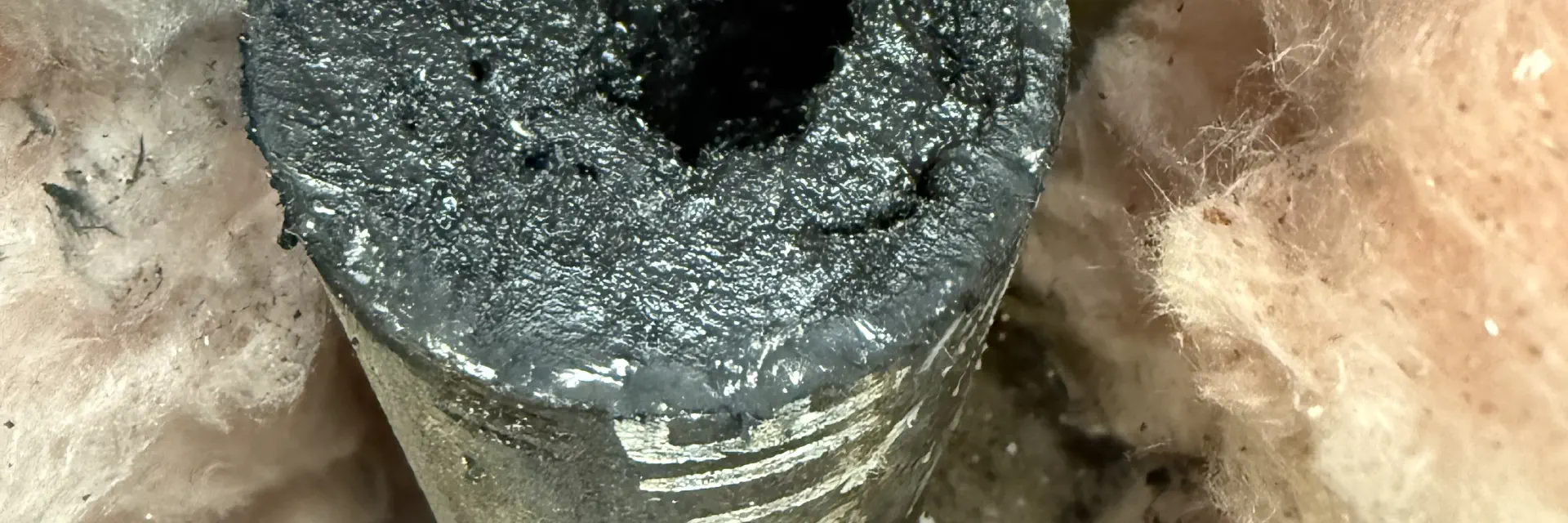
High-Speed Drain Cleaning: East Valley's First Mover
A standard cable snake pokes a hole through a clog. High-speed drain cleaning scours the pipe wall itself. Diagnostic Plumbing was among the first plumbing companies in the East Valley to bring professional-grade high-speed mechanical drain cleaning to the market. Recurring backups are why we invested in the equipment.
Why High-Speed Beats a Cable Snake
A cable snake is a proven tool. It reaches into the drain, breaks through the obstruction, and restores flow. For simple blockages, it works. The problem is what it leaves behind.
Grease, biofilm, and mineral scale don’t form in the center of the pipe; they accumulate on the pipe wall. A snake drives through the middle of that buildup and restores temporary flow. The coating on the pipe wall stays exactly where it was. It accumulates again, and the backup returns, sometimes within weeks.
High-speed drain cleaning is mechanical descaling. Professional-grade spinning chains and cables make direct contact with the pipe wall as they rotate. The chains scour the interior surface, cutting through wall deposits rather than just opening a channel through them. The result is a pipe that is substantially cleaner, not just temporarily unblocked.
Customers see drains that previously backed up four times a year stay clear for years.
What It Cuts Through
High-speed mechanical cleaning is effective against the three most common causes of recurring drain problems in East Valley homes:
Grease and soap accumulation. Kitchen lines and shower drains accumulate fatty deposits over years. Dish soaps, cooking oils, body washes, and lotions all contribute. The deposits build up in layers on the pipe wall — a snake passes through the center; high-speed removes the layers.
Biofilm. Biofilm is a microbial colony: bacteria that colonize the organic material coating the pipe wall and produce a slick, gelatinous matrix around themselves. It’s responsible for the slow-draining shower that smells bad and keeps getting worse. High-speed mechanically disrupts and removes the biofilm layer.
Mineral scale. East Valley water is hard — 13–25 grains per gallon depending on city and season, and higher at seasonal peaks. Most homeowners know scale builds up in their water heater and on their fixtures. It also builds up inside drain lines. Water softeners address scale on the supply side; high-speed cleaning addresses it on the drain side.
Why We Pair High-Speed With Hot Water and Enzyme Treatment
High-speed cleaning removes the mechanical buildup. Hot water and enzyme treatment extend the result.
Hot water loosens and mobilizes the grease and biofilm residue that the chains break free, helping it flush completely out of the line rather than settling back down. Enzyme treatment introduces beneficial bacteria that continue breaking down organic material in the pipe after we leave — biofilm and grease at the molecular level, over days and weeks. The two together work the way they should: the mechanical cleaning does the heavy lifting, and the biological treatment prevents rapid re-accumulation.
The result is a drain that stays clean for months instead of needing attention again in six weeks.
High-Speed vs. Hydro-Jetting vs. Chemical Drain Cleaners
| Method | How It Works | Pipe Wall Cleaning | Pipe Safety | Root Cutting | Best For |
|---|---|---|---|---|---|
| High-Speed Mechanical | Spinning chains/cables scour the pipe interior | Yes — direct wall contact | Safe on serviceable pipe | Effective | Recurring backups, grease lines, biofilm, mineral scale, root intrusion |
| Cable Snake | Cable breaks through obstruction | No — punches through center only | Safe | Limited | Simple blockages, first-time clogs |
| Hydro-Jetting | High-pressure water flushes the line | Partial — depends on pressure and nozzle | Not for deteriorated pipe | Partial | Grease-heavy commercial lines; complements mechanical cleaning |
| Chemical Cleaners | Chemical reaction dissolves organic material | Partial — dissolves soft organic only | Degrades seals, gaskets, older pipe | No | Light consumer use only; not a professional solution |
A note on chemical drain cleaners: the issue isn’t only effectiveness. The alkaline and acidic compounds in store-bought drain cleaners attack the organic material in the clog but don’t discriminate. They also degrade the rubber seals and gaskets in your P-traps and drain fittings, and they accelerate corrosion in older pipe materials. Used repeatedly over years, they quietly compromise plumbing integrity. They’re also hazardous to handle and to the sewer system. High-speed cleaning is physical, not chemical, and has no interaction with your pipe material.
When We Run a Camera Inspection
We run a camera when the situation warrants it, not on every visit.
A camera look makes sense when:
- A drain keeps backing up and the cause isn’t obvious
- The drain didn’t respond the way we expected after cleaning
- We suspect root intrusion at a specific point (toilet flange is the most common in East Valley homes)
- You’re making a significant decision — repipe vs. continued cleaning — and want to see what’s actually in the pipe before committing
We won’t upsell a camera if we cleared your kitchen drain and it’s draining normally. We will tell you when we think a look is warranted, explain why, and let you decide. We stand behind our high-speed work, and traditional cabling when paired with camera confirmation.
When High-Speed Isn’t the Right Call
High-speed mechanical cleaning is aggressive. That’s what makes it effective, and it’s why we assess the pipe before we run it.
Severely corroded cast iron is the primary exception. Older homes in parts of Mesa, Chandler, and Gilbert have cast iron drain lines that have reached the end of their serviceable life. The pipe wall is thin, pitted, and structurally compromised. Running high-speed chains against that material doesn’t clean it; it accelerates deterioration. In that situation, the honest answer is that cleaning is the wrong tool. A repipe is the right call, and doing it on your timeline costs less than dealing with a collapse.
We’ll tell you what we find. If the pipe needs to be replaced, we say so and explain why — with camera confirmation when the situation calls for it.
What East Valley Drains Actually Look Like Inside
Most homeowners have never seen the inside of their drain lines. Here’s what shows up regularly in the East Valley:
Root intrusion at the toilet flange. Tree and shrub roots follow moisture — and toilet flanges are a common entry point, especially in homes with landscaping near slab penetrations. Roots at the flange are often a localized problem. Diagnosing the exact location matters: a targeted repair or localized cleaning is very different from replacing the entire drain system. Accurate diagnosis saves money.
Biofilm accumulation. Shower drains in homes where liquid soaps, conditioners, and body washes have been used for years often show significant biofilm — a thick, dark, gelatinous coating that reduces the pipe’s effective diameter progressively. It smells. It slows drainage before it stops it. High-speed cleaning, followed by enzyme treatment, addresses it effectively.
Mineral scale inside drain lines. Hard water affects supply lines, water heaters, and fixtures, but most homeowners don’t think about their drains. Calcium carbonate deposits do form inside drain lines, particularly in hot-water lines and at bends where flow slows. East Valley hardness levels — 13–25 gpg across the service area — create the conditions for this. Addressing the scale on the supply side with a water softener reduces the rate of accumulation; cleaning the existing buildup is a separate job. For more on East Valley water hardness and contaminant data by city, see our Whole Home Filtration page.
What to Expect During the Visit
We diagnose before we clean. Different drain problems call for different tools, and the wrong tool wastes time and money.
The visit typically goes:
- Assessment — We ask about the history (frequency, which drains, what’s been tried), run water to observe flow, and inspect access points.
- Equipment setup — High-speed equipment is set up at the cleanout or access point relevant to the line being serviced.
- Cleaning — The high-speed run, typically paired with hot water flush to mobilize the debris.
- Enzyme treatment — Applied after cleaning to continue breaking down residual organic material.
- Flow confirmation — We verify the line is draining correctly before we pack up.
- Camera, if warranted — If something during the cleaning didn’t behave as expected, or if the situation calls for documentation, we run the camera here.
We clean up after ourselves. If the drain we’re working on is in a finished space — kitchen, bathroom — we treat it accordingly.
For recurring or severe drain problems, see our Drain Cleaning service page for a full overview of how we approach drain issues from diagnosis through resolution.